
If you’ve ever had a kid ask, “Can I buy this?” in the middle of a store aisle, you’ve seen the perfect (and slightly stressful) moment where money skills get real. The tricky part isn’t explaining what money is — it’s helping kids practice choices like saving vs. spending, waiting vs. impulse, and needs vs. wants without turning it into a lecture.
Games to teach kids about money are one of the easiest ways to build saving, spending, and budgeting habits—without turning it into a lecture.
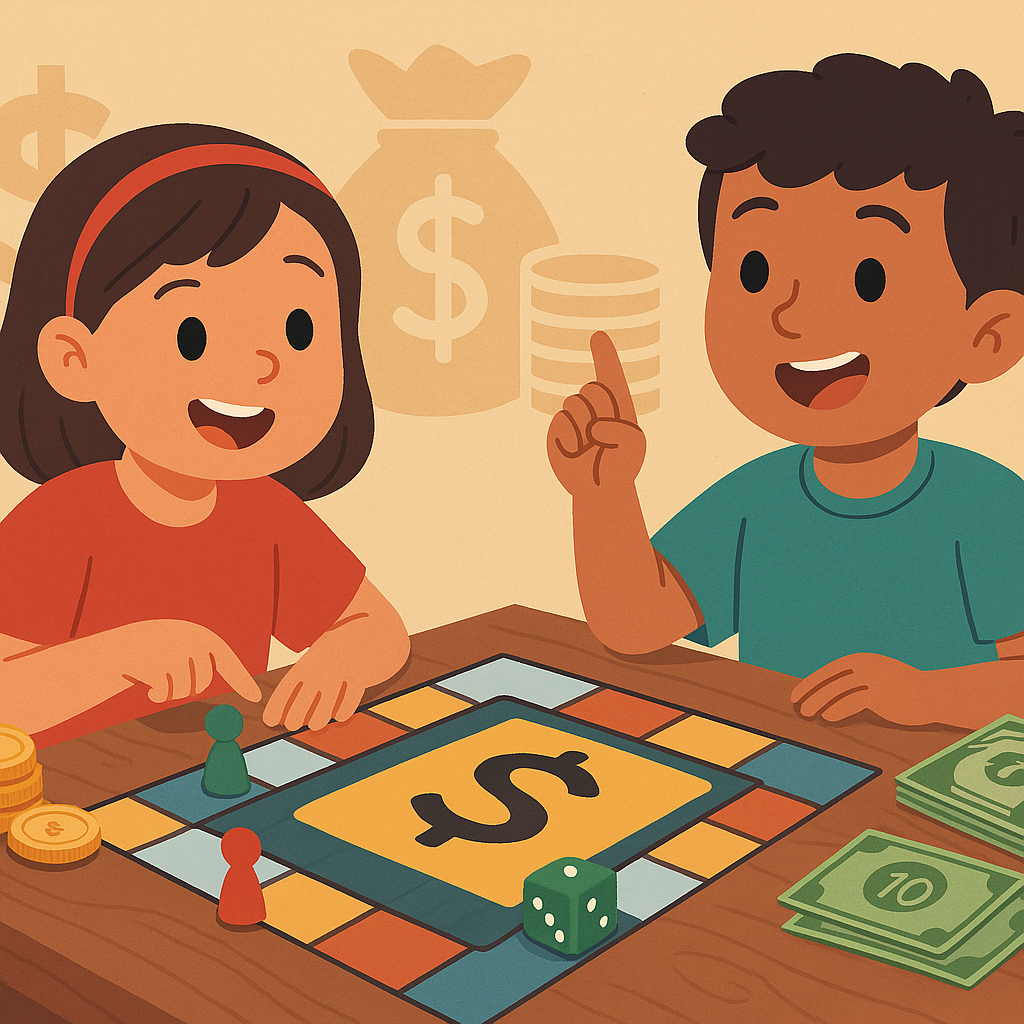
That’s where games shine. They let kids “try on” real money decisions in a safe, low-stakes way — and they make the conversations way easier to have (because the game is doing the teaching with you).
Quick start (pick one today):
- Ages 5–8: Store Simulation + Savings Jar Challenge
- Ages 8–12: Monopoly (or Monopoly Junior) + Allowance Budgeting Game
- Teens: Financial Football + a weekly “money challenge” goal
Next step: Want a simple system to turn these games into real-life practice? See my guide to setting up a chores-and-allowance system for kids.
Why Teaching Kids About Money Matters
Understanding money management is a skill that benefits children throughout their lives. From learning how to save and budget to grasping the value of investments, financial literacy helps kids:
- Develop responsibility and independence
- Avoid debt in adulthood
- Build a foundation for future financial success
Teaching kids about money instills habits that can benefit them in adulthood, such as saving regularly, understanding the value of work, and making informed financial decisions. Financially literate individuals are better prepared to navigate life’s financial challenges, such as managing student loans, securing a mortgage, or saving for retirement.
Games provide an excellent platform for teaching these skills in a way that resonates with children. They’re interactive and relatable and often feature real-world scenarios that make learning about money practical and memorable.
Quick win: After game night, do a 5-minute “money check-in.” Use this simple kids budgeting and savings goals template.
Board Games for Teaching Financial Concepts
| Game | Key Lessons Taught | Recommended Age |
|---|---|---|
| Monopoly | Budgeting, negotiation, investing, managing cash flow | 8+ |
| The Game of Life | Earning/spending, planning ahead, dealing with expenses | 8+ |
| Pay Day | Budgeting, saving, managing debt | 8+ |
Monopoly
Monopoly is a classic for teaching financial concepts. Players buy, sell, and trade properties while managing money, paying rent, and making strategic financial decisions. It introduces kids to:
- Budgeting
- Negotiation
- Investment
- Managing cash flow
It also offers a simple way to discuss debt and tradeoffs (mortgaging properties, running out of cash, etc.). Monopoly Junior can be a great starting point for younger kids.
The Game of Life
The Game of Life simulates real-life financial decisions — choosing a career, buying a home, and saving for retirement. Players encounter rewards and setbacks along the way, teaching kids about:
- Earning and spending
- Planning for the future
- Dealing with unexpected expenses
Pay Day
Pay Day focuses on managing monthly finances. Players move through a calendar month, earn a salary, pay bills, and handle unexpected expenses. It helps kids understand:
- Budgeting
- The importance of saving
- The impact of debt
Digital Games and Apps for Money Skills
| App/Game | Key Lessons Taught | Platform |
|---|---|---|
| Savings Spree | Delayed gratification, goal setting, wise spending | iOS |
| Financial Football | Budgeting, credit/debt, saving goals | iOS, Android, Web |
| Bankaroo | Income tracking, savings goals, understanding interest | iOS, Android, Web |
Savings Spree
Savings Spree teaches kids about saving, spending, and investing through mini-games that show how daily choices affect money over time.
Financial Football
Financial Football combines money questions with a fast-paced sports format. Players advance by answering financial literacy questions correctly.
Bankaroo
Bankaroo is a “virtual bank” that helps kids track allowance, set savings goals, and understand concepts like interest.
Hands-On Activities to Reinforce Money Lessons
| Activity | Key Lessons Taught | Age Group |
|---|---|---|
| Store Simulation | Comparing prices, making change, budgeting | 5–10 |
| Allowance Budgeting Game | Saving/spending/donating balance | 6–12 |
| Savings Jar Challenge | Goal saving, patience, visible progress | 4–10 |
Store Simulation
Set up a mock store at home. Assign prices to household items and let kids “buy” them using play money. Encourage them to compare prices, make change, and prioritize purchases based on a set budget.
Allowance Budgeting Game
Give kids a weekly allowance and let them decide how to split it between saving, spending, and donating. Track their choices and discuss tradeoffs over time.
Savings Jar Challenge
Use a clear jar so kids can see progress toward a goal (toy/book/etc.). It’s simple, visual, and surprisingly motivating.
Online Resources and Tools for Parents
If you want free, reputable activities you can print and use at home, the Consumer Financial Protection Bureau (CFPB) has a parent-friendly hub called Money as You Grow (activities, age-based guidance, and conversation starters).
Benefits of Using Games for Financial Education
- Engagement: Kids absorb more when they’re having fun.
- Retention: Interactive learning reinforces key concepts.
- Confidence building: Practice builds comfort with money decisions.
- Early habit formation: Strong habits form faster when started young.
Tips for Parents
- Start early: Introduce saving/spending as soon as kids understand numbers.
- Be consistent: Reinforce lessons through games and real-world moments.
- Lead by example: Kids learn by watching how you spend and save.
- Encourage questions: Normalize talking about money.
FAQs
What are the best board games to teach kids about money?
Monopoly, The Game of Life, and Pay Day are great for budgeting, planning, and money decisions.
Can digital games effectively teach financial literacy?
Yes — apps like Savings Spree, Financial Football, and Bankaroo make concepts interactive and practical.
At what age should I start teaching my child about money?
You can start basic concepts like saving and spending around ages 3–4 using simple activities.
How can I make learning about money fun?
Use board games, apps, and hands-on activities like store simulations or a savings jar challenge.
Why is financial literacy important for kids?
It builds responsibility, independence, and smart money habits for long-term success.
Conclusion
Teaching kids about money doesn’t have to be daunting. With games, apps, and hands-on activities, you can make financial literacy enjoyable while building skills that last a lifetime.